
Project Brief: Chronic Wasting Disease Educational Films for Colorado Parks & Wildlife
Client Overview
Client Name: Colorado Parks & Wildlife (CPW)
Mission: To perpetuate the wildlife resources of the state, provide a quality state parks system, and offer enjoyable and sustainable outdoor recreation opportunities that educate and inspire current and future generations to serve as active stewards of Colorado’s natural resources.
Website: www.cpw.state.co.us
Industry: Wildlife Conservation and Outdoor Recreation
Objective: Increase awareness among hunters and stakeholders about Chronic Wasting Disease (CWD) through two educational films, emphasizing its prevalence, impact, and the importance of collaborative management to ensure sustainable wildlife populations in Colorado.
Project Scope
Northwoods Collective was engaged to produce two educational documentary films to inform hunters and the broader public about Chronic Wasting Disease (CWD), a fatal prion disease affecting deer, elk, reindeer, and moose. The films aimed to highlight the realities of CWD from distinct perspectives—one through the lens of a Colorado Game Warden and the other through interviews with biologists and stakeholders—to foster understanding and encourage proactive management among hunters and conservation partners.
1. Film Production: Game Warden Perspective
Objective: Create a compelling documentary film to educate hunters about CWD through the firsthand experiences of a Colorado Game Warden.
Activities:
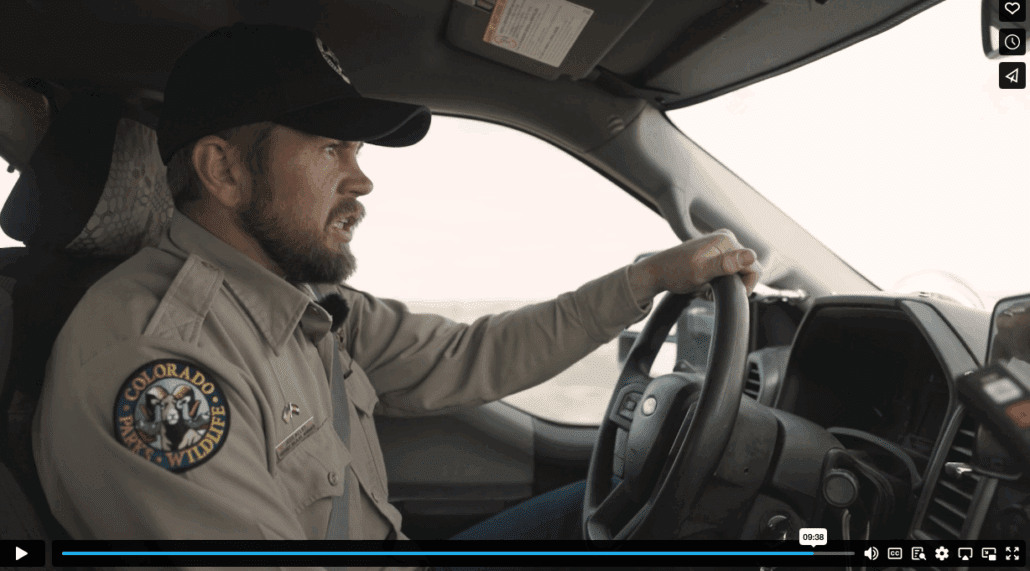
Collaborated with CPW to select District Wildlife Manager Josh Melby as the central figure, leveraging his expertise and interactions with landowners.
Filmed on-location sequences in Colorado, capturing Melby’s fieldwork, including inspections of mule deer suspected of CWD and discussions with private landowners about their experiences.
Crafted a narrative emphasizing the importance of landowner cooperation in addressing CWD and its impact on local wildlife populations.
Outcome: Produced a visually engaging film, “Seeing is Believing: Part 1,” that humanized the issue of CWD, highlighting the practical challenges faced by game wardens and landowners in managing the disease.
2. Film Production: Biologist and Stakeholder Interviews
Objective: Develop a documentary film to provide a scientific and collaborative perspective on CWD through interviews with experts and stakeholders.
Activities:
Coordinated with CPW, the Wyoming Game and Fish Department, the Chronic Wasting Disease Alliance, the Colorado Department of Agriculture, and the Animal and Plant Health Inspection Service to identify key interviewees.
Conducted interviews with wildlife biologists, conservation coordinators, and national stakeholders to discuss CWD research, management strategies, and the importance of teamwork.
Outcome: Delivered “Seeing is Believing: Part 2,” a film that provided a comprehensive overview of CWD, reinforcing the need for collaborative efforts among wildlife professionals and stakeholders to manage the disease effectively.
3. Marketing Strategy for Film Distribution
Objective: Maximize the reach and impact of the CWD educational films among hunters, landowners, and conservation communities.
Activities:
Developed a distribution strategy in partnership with CPW, including promotion through CPW’s website, social media, and Hunter Outreach Program channels.
Targeted hunting communities via webinars, seminars, and skills clinics, leveraging CPW’s existing educational platforms.
Collaborated with conservation partners like the Chronic Wasting Disease Alliance to share the films with broader audiences.
Outcome: Achieved widespread dissemination of the films, increasing awareness of CWD and encouraging proactive testing and reporting among hunters.
Key Deliverables
- “Seeing is Believing: Part 1” – A documentary film featuring CPW District Wildlife Manager Josh Melby, focusing on CWD’s impact from a game warden’s perspective.
- “Seeing is Believing: Part 2” – A documentary film with interviews from biologists, coordinators, and stakeholders, highlighting scientific and collaborative approaches to CWD management.
- High-resolution footage, graphics, and edited content for both films.
- Marketing strategy and distribution plan for film promotion through CPW and conservation partner channels.
Project Outcomes
- Increased Awareness: Educated hunters and stakeholders about CWD’s prevalence and risks, using compelling storytelling to highlight its impact on Colorado’s wildlife, such as the 15.3% prevalence in the White River mule deer herd.
- Stakeholder Engagement: Strengthened collaboration between CPW, landowners, and conservation organizations by showcasing the importance of teamwork in CWD management.
- Behavioral Impact: Encouraged hunters to participate in CWD testing and reporting, supporting CPW’s efforts to manage the disease and maintain healthy wildlife populations.
- Conservation Support: Reinforced CPW’s mission to promote sustainable wildlife management, aligning with their goal of inspiring active stewardship among current and future generations.